Make Lighting Incandescent Again
LEDs are from the devil. In this essay, I will...

For those who prefer to read paper and ink rather than frying both your retinas and brain, click this button:
Dear friend,
How’d you like that clickbait title and tagline?
I meant every word. Well, perhaps that tagline about LED being demonic was a bit of an exaggeration…or perhaps not. Fluorescent lighting is also evil, by the way. In case you didn’t know.
You see, there is a theology of light. Just as there is a theology of architecture, or music.
I first started thinking about this idea that incandescent light is better than LEDs when I found a video in my YouTube feed from Julia James Davis over at The War On Beauty, titled “Heaven Or Hell on Earth: The Aesthetic War of Lighting”. Intrigued by the title and already inclined to agree with whatever Julia would say, I watched the video….and found myself aggressively nodding and scribbling notes. Julia articulated exactly what I’ve sensed for years but haven’t had the time to put into words, until now.
I highly recommend you go watch that video before reading the rest of this post. Less than 15 minutes long, it will not only provide additional context to what I’ll discuss today, but also hopefully open your eyes to how modern lighting is one of the subtlest, insidious plots engineered by the Machine to crush our souls.
Anyway. Go watch the video. (Please come back when you’re finished.)
Welcome back! What did you think?
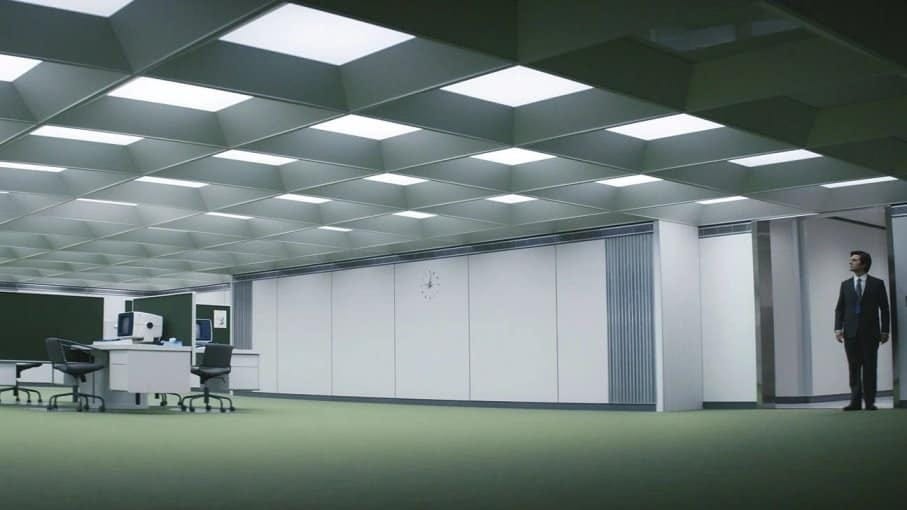
Friend, I want you to look at the two pictures below. What is your immediate reaction to each? What does your gut tell you?
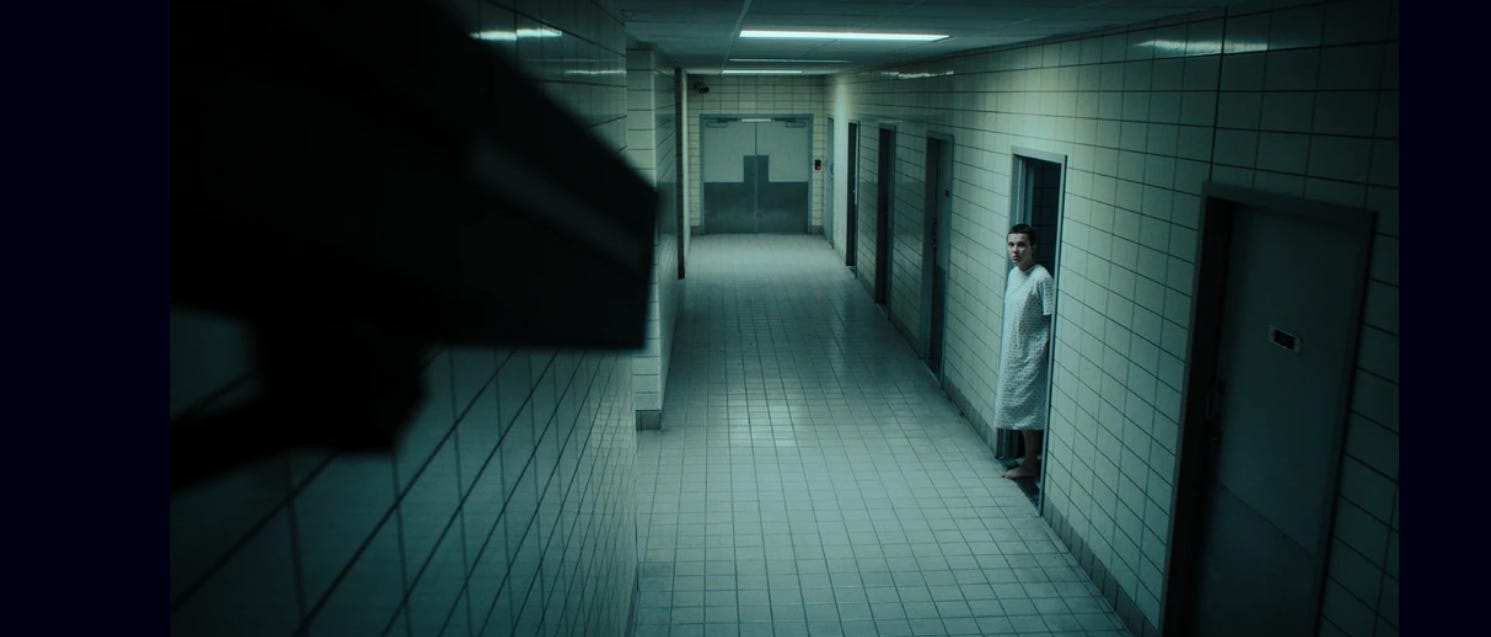
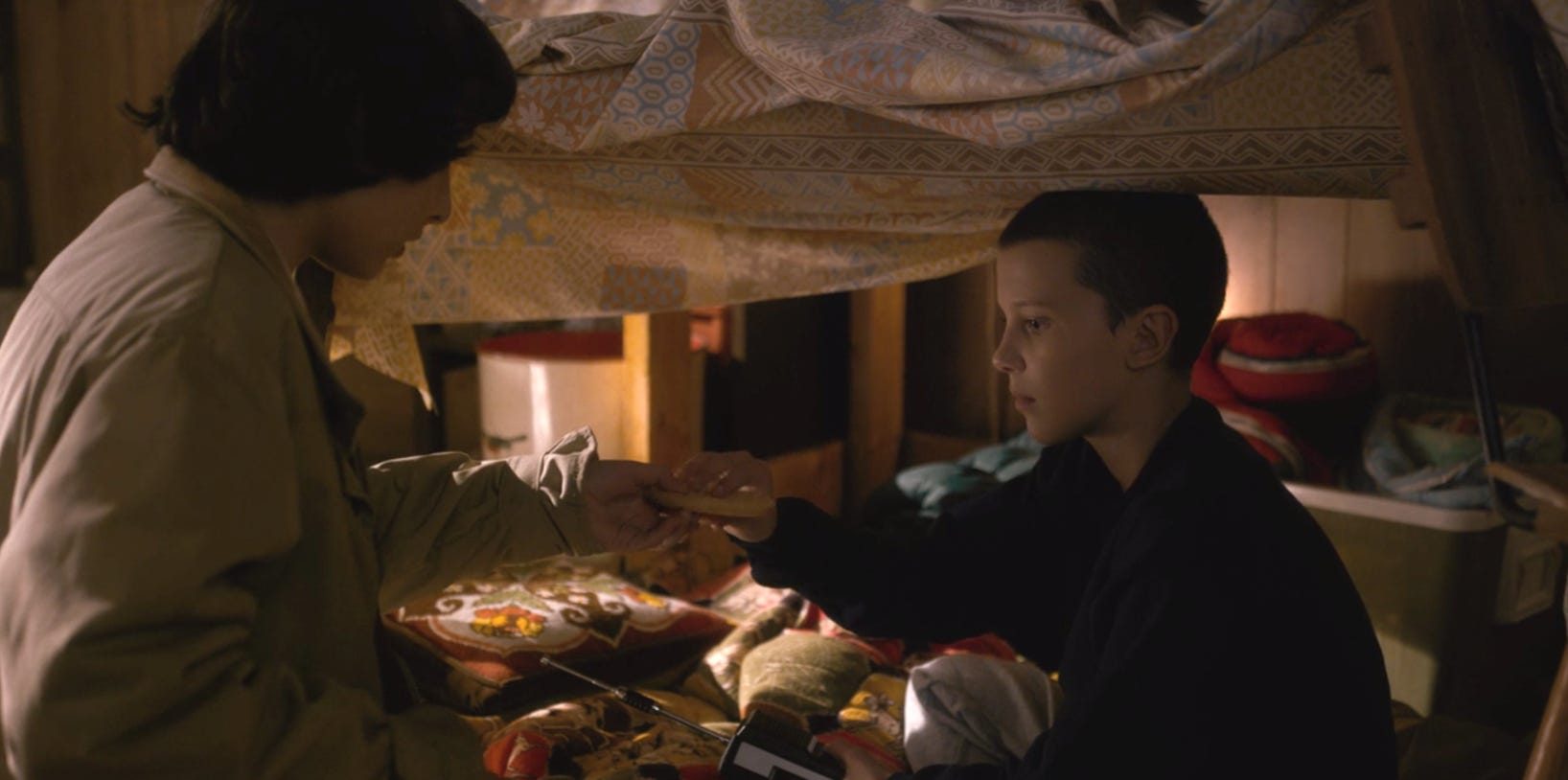
Do you have a moral sense that one of these scenes is, somehow, worse than the other?
I hope so. That’s partially your aesthetic sense. But more than that…if you inwardly recoiled at the first picture, and then your soul relaxed upon viewing the second picture…that is your God-given instinct telling you that there’s something wrong about the first and right about the second.
Both these photos are from the popular Netflix series Stranger Things. While I don’t like some aspects of the show, overall it is done quite well amidst a deluge of slop that passes for TV shows these days. I especially appreciate that, for the most part, Stranger Things maintains a moral binary. The heroes, while complex and flawed, are good, and the bad guys are clearly bad guys. Without giving away spoilers, I’ll share that a “main” villain has lurked in the shadows of all previous seasons, gradually revealing himself over time thanks to the show’s wholly masterful writing. And he is evil! There is no moral ambiguity about him, no sympathetic redeeming qualities. He is evil, creepy and his only goal is to twist, destroy and dominate. It’s amazing. In short, Stranger Things allows the heroes to be good and the villains to be evil. That’s rare in modern cinema, and it’s one of the reasons why I love the show.
I didn’t realize the fifth and final season comes out on November 25th, only a week after this post. Genuinely had no idea. That’s an interesting coincidence. Well…you should go watch Stranger Things if you haven’t.
Returning from this brief tangent…I also appreciate Stranger Things’ use of aesthetics. The Duffer Brothers know how to use lighting not only to set a scene’s mood, but also to tell a story and hint at deeper moral truths. A scene’s lighting teaches the audience without a word needing to be said.
Look at the two sample images again. The first is the Hawkins Lab, where (spoilers but it’s been ten years so…) Eleven and other children were kept to be experimented upon for their abilities. The lighting is harsh and cold. Everything is the same: endless colorless hallways lit by fluorescent light, beaming from overhead so that there is no place to hide. No escape. The atmosphere is sterile, empty, disconcerting. Dystopian “hospital aesthetic” at its finest. The scene is meant to unsettle you, to convey a feeling of subtle danger and of always being watched. Zero variety, nothing but endless sameness. Psychological torture. Such a place is lifeless. Dead.
What about the second image? Here, we are in the Wheeler family home with Mike and Eleven. She has just escaped the nightmare lab and found refuge here. What a tonal shift. Instead of harsh overhead lighting, the lamplight glows in the background. It’s soft and gentle, inviting the viewer into the relationship of the scene. Even the color is different: warm gold instead of cold blue-white. Light interplays with shadow and subtly gilds the characters’ faces. Here, the atmosphere feels homey, warm, safe and natural. It provides a fitting setting for Mike to offer Eleven food, shelter, companionship and, most importantly, safety. There’s no need for her to run or hide anymore. She has escaped her hellish prison. She doesn’t have to fear. Eleven has passed from death to life.
We the audience would never have felt the emotional impact of this scene if the Wheeler basement were a tidy, minimalistic place lit by white overhead lighting. Likewise, the Hawkins lab just wouldn’t convey the same pervading psychological terror if cozy living room lamps adorned the hallways.
The use of light in film is so important because it tells a story alongside the characters. It gives meaning. This principle extends beyond the screen to real life. After all, the first thing God created was light. Jesus is the Light of the world. Light allows humans to see, both physically and spiritually. It affects our souls as well as our eyes. The kind of light we choose impacts everything: not only how we see the world, but our art, our homes, our moods, our culture, and our worldview. We cannot escape light. It saturates our environment. Light affects us on a deeply spiritual and psychological level beyond mere rationale. Thus, it matters.
Why do we universally understand the negative stereotype of the office cubicle sucking our souls away? Why do we all know what we mean when we refer to “hospital aesthetic” or “factory lighting”? Why does everyone who isn’t insane prefer this picture…
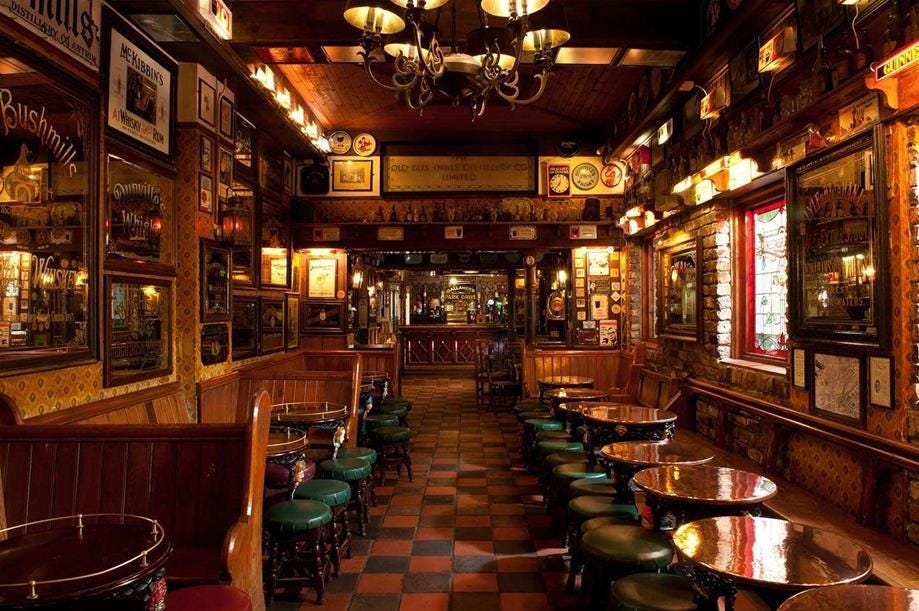
…over this picture?

Which place would you rather be?
It seems that our dislike of modern fluorescent lighting is universal. But why?
Fluorescent light, LED light, blue light…these are too cold. Harsh. Depressing. Soul-sucking. This kind of light flattens everything and washes away life and vitality. It’s the corollary to communist, brutalist architecture, where everything is the same: explicitly designed to break down the human spirit. To get rid of individuality and independence. Because it often comes from above, this light brings a sense of existing under an all-seeing eye. Constant surveillance.
As Julia mentioned in her video (I hope you watched it), fluorescent and LED lighting is cheaper than incandescent. You can make more of it faster, and it lights up more areas. It uses less energy. It’s efficient.
It’s also a tool for control. In 2023, the Biden administration banned incandescent lighting from general service lamps and regulated a “minimum standard of 45 lumens per watt for light bulbs” in households. Incandescent bulbs have a much lower lumens per watt ratio, so they’re less efficient…and therefore the government banned them, supposedly to “save families $100 every year.”
Did you know that? I didn’t until I watched Julia’s video.
Maybe you’re saving $100…but what are you losing?
Remember, there’s a reason dystopian films use cold lighting so often. Big Brother uses LEDs.
Not to mention the physical stress, anxiety and fatigue that blue light wreaks upon our minds and bodies. We all know what our screens are doing to us…but have we paused to consider what our lights are doing? We can put away the smartphone, but it’s a lot harder to avoid surveillance lighting, especially at work. What is our constant exposure to fluorescents and LEDs doing to our health, both mentally and physically?
Julia couldn’t have put it more aptly when she called it “dehumanizing lighting.” It’s anti-human, and anti-God.
Now consider incandescent light, or even better, natural light. It’s warm, cozy, vibrant, homey, and golden. Rather than all-encompassing, it has depth and dances with shadow and texture. It feels more human. Studies have shown that exposure to natural light, such as sunlight or candlelight, makes people feel calmer, more at ease and less stressed. It is romantic, relational and literally life-giving (gotta get that Vitamin D). Natural light also has a mystical, reverent quality to it that draws our hearts closer to God.

Nearly every public space (and many households) have embraced fluorescent and LED light. Schools, workplaces, even churches. Cold, sterile overhead lighting has become the norm. But what is it doing to us? To our children?
When I was in elementary school, I loved the times when the teacher would flick off the overhead light and leave only a warm desk lamp and sunlight streaming through the windows. She usually did this when we were reading, resting or listening to classical music. Every time, I felt so much calmer and at peace. My imagination and creativity blossomed. But when the overhead lights inevitably came back on, I always felt a twinge of sadness. I wished we could leave the lights off all the time. The warm natural light was enough. I wasn’t alone in my sentiment, either: all my classmates clamored for the lights to go off whenever the teacher suggested it. Even in middle school. As an adult at work, I still prefer to work with the overhead lights off. I can physically feel the stress leaving my body whenever I do so.
Even in the heart of a child, something recognizes the goodness of warm light and the badness of cold light. It’s more than an aesthetic preference; the desire for natural light has been woven into our souls by our Creator, who is the true Light that gives light to everyone.
Writing that previous sentence made me realize: when we use modern lighting, we are playing God.
How?
Cold overhead lighting seeks to reveal everything. To control everything. Nothing is allowed to be hidden in shadow. Everything must be optimized for efficiency, for maximum output…it all must be controlled and out in the open. No room for mystery, slowness or wonder. A world lit by modern lighting is a world devoid of beauty and meaning. It negatively impacts us whether we admit it or not. Because to try to control and reveal everything is to try to play a role reserved only for God and forbidden to us. It’s just another part of the Machine.
So how can we fight back against Machine lighting?
Turn off your lights, especially if you’re not actually using them. That will really save you energy. Allow natural light to fill your home and workspace (if you can). Buy warm toned, colorful lampshades to mitigate the effect of LED bulbs. Light candles or oil lamps when the sunlight fades.
Who cares if you can’t see as much or if it’s a “fire hazard”? Your soul, and your eyes, will rest. You’ll reap far greater benefits than any supposed costs. Plus, your kids will be delighted. Pun unintended.
Real, beautiful light becomes even more important at this time of year, when each day is shorter than the last and the shadows lengthen. As we light our candles or bask in the golden afternoon sun, let us find hope amidst the darkness. Let us meditate upon our Lord who gave Light to the world. Let us fill our homes with the light of the Kingdom, rather than the glare of hell.
“But seek first the Kingdom of God and His righteousness, and all these things will be added to you as well.” -Matthew 6:33
-Laura
Thank you for reading this post! I hope you enjoyed it and found it fruitful. If you’d like to see more, consider becoming a subscriber to get all my posts straight to your inbox.
While I love writing all my posts, it takes a lot of time and effort. If you’d like to show your appreciation beyond a like or restack, consider becoming a paid subscriber for as little as $5 a month. It shows tremendous support for my little ministry; but more than that, it lifts my spirits and helps me support my family.
Thank you, friend :) Until next time.
- This post was written entirely from the brain and heart of a real, flesh-and-blood, ensouled human being, with zero input or editing from AI. All artwork is credited to the original, human creators. I will never willingly outsource my brain to AI. EVER. -